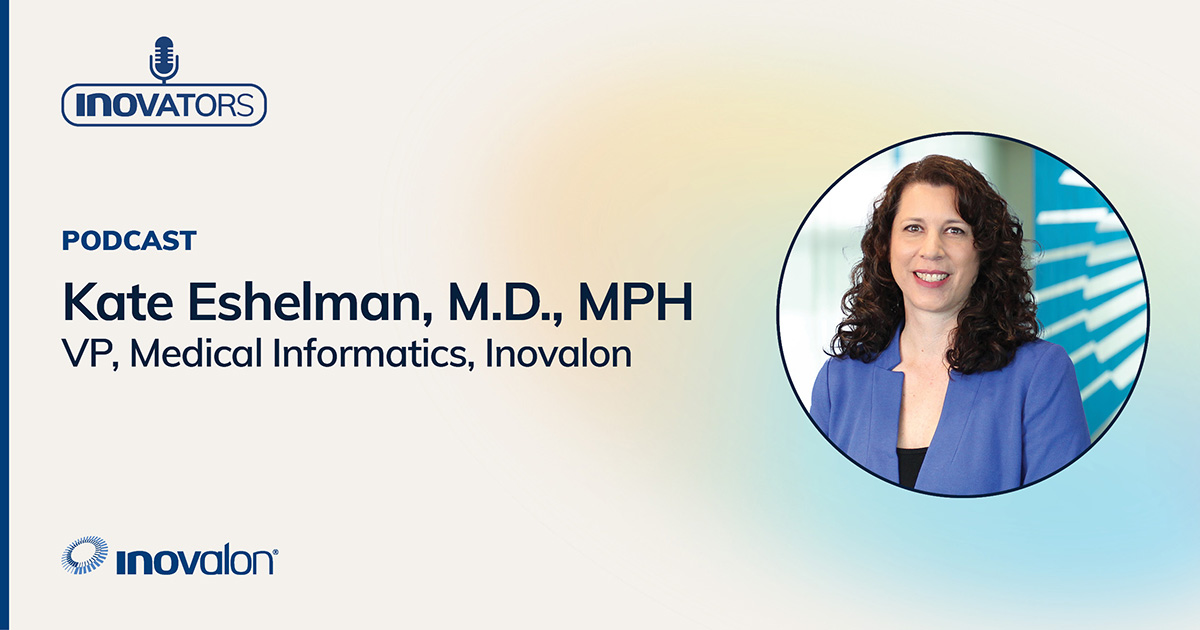
Dr. Eshelman oversees the development of Inovalon’s clinical toolsets, delivering provider-decision solutions that are patient specific at the point of care. Dr. Eshelman’s medical and clinical experience play a significant role in the design and development of Inovalon’s medical informatics product lines, which gather and rapidly process large amounts of patient and provider data to deliver insights and actionable solutions to the point of care.
Prior to this role, Dr. Eshelman served as Inovalon’s Senior Medical Director, where she was responsible for the provision and maintenance of best-practice and evidence-based standards across all clinical product lines. In this role, she played an integral role in the design of Inovalon’s data-driven encounter support solution, as well as its healthcare data analytics and individualized insights product.
For more than 20 years, Dr. Eshelman has held clinical, evidence-based, and data-driven positions across a variety of healthcare institutions. Prior to joining Inovalon, Dr. Eshelman served as an assistant professor in the internal medicine department at the University of Maryland, where she supervised residents in inpatient and outpatient internal medicine. Previously, she worked in underserved medicine on the Navajo Indian Reservation and as a primary care physician and director of the Diabetes Collaborative at the Family Health Center of Baltimore.
Dr. Eshelman graduated summa cum laude from Lafayette College with a degree in biochemistry. She received her medical degree, graduating with honors, and Master of Public Health, magna cum laude, from George Washington University, where she was elected into the medical honor society Alpha Omega Alpha. Dr. Eshelman completed her residency in internal medicine at the University of Pennsylvania Health System in Philadelphia. In addition to being board certified in Internal Medicine, Dr. Eshelman is also board certified in Clinical Informatics.

What’s Next for Risk Adjustment? The 2026 Landscape
In this INOvators episode, Kate Eshelman shares how risk adjustment processes may shift this year & what health plans need to do to prepare.

RADV Audits: Taking a Proactive Approach in the Face of New Regulations
It’s no longer a question of if, but when. In May 2025, the Centers for Medicare & Medicaid Services (CMS) announced a more aggressive strategy for conducting Medicare Advantage Risk Adjustment Data Validation (RADV) audits.

Medicaid Budget Cuts Test Risk Adjustment Program Readiness
In value-based care, shared goals between health plans and providers are only possible when both parties are working from the same playbook. But in reality, providers are often left to guess at the full picture. Many don’t have access to their patient’s complete medical history, especially those not using large EHR systems. That lack of visibility can mean missed care gaps, delayed diagnoses, and extra administrative burden for both the provider and the health plan.

Modernizing Medical Record Reviews in 2025 with the Help of AI
Explore the transformative effects of AI in MRR, and what this may mean for health plan reporting and member care in 2025.

AI and Clinical Expertise in Healthcare: A Combined Approach
Hear from Dr. Kathryn Eshelman on why AI and clinical expertise in healthcare must work together, not in place of each other.

Proactive CMS RADV Compliance: Identify Potentially Over-Coded Conditions Early On
Every year, the Centers for Medicare and Medicaid Services (CMS) conducts Medicare Advantage Risk Adjustment Data Validation (RADV) audits on Medicare Advantage (MA) plans to validate the accuracy and completeness of their data used in risk adjustment.