
WHITE PAPER
Claims Denials:Causes, Impact, and AI-Enabled Prevention Strategies
Executive Summary
In today’s fast-paced healthcare landscape, claims denials continue to pose a significant threat – often leading to delayed payments, increased recovery costs, and lower patient and resident satisfaction. With 87% of denials attributed to front-end workflows such as insurance eligibility and benefits verification, the financial implications are vast across all care settings.
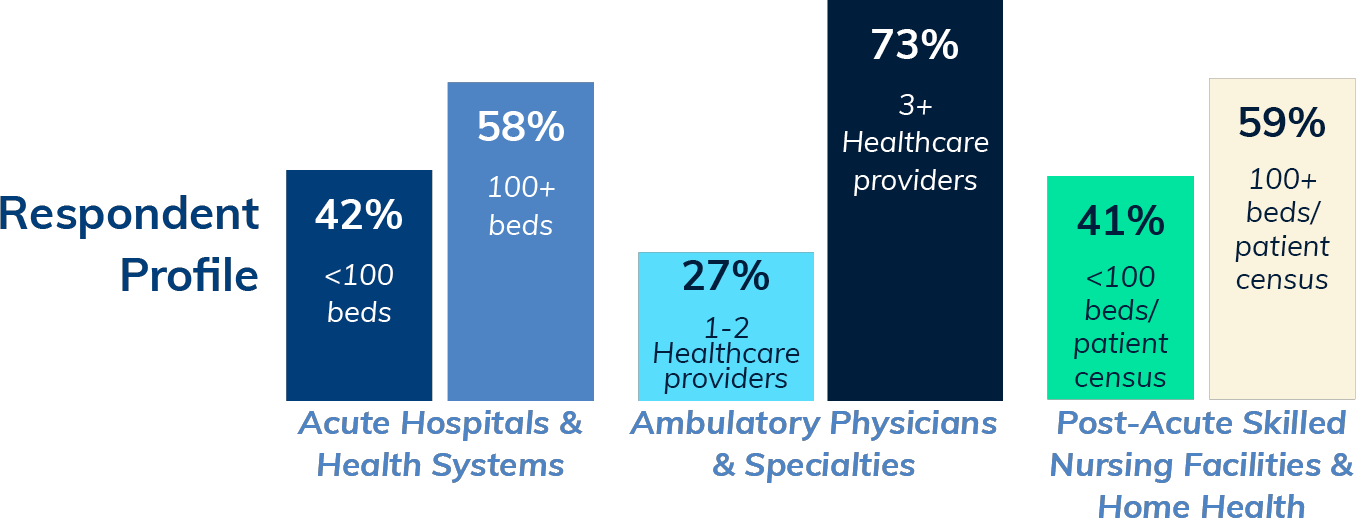
A survey of over 400 healthcare leaders and managers across hospitals, physician groups, home health, and skilled nursing facilities uncovers the root causes of most claims denials – as well as how AI-driven solutions could transform denial management.
The research underscores the consistent rise of claims denials and how all parts of the revenue cycle play a role in denial prevention and management.
Read the Executive Summary below and download the full white paper to discover providers’ most pressing revenue challenges and opportunities to consider in the future.
400+ Providers surveyed
All major care settings — executives and managers — enterprises and independents
Claims denials:
Threat to healthcare enterprise
Why are denials so important?
Healthcare leaders say that reducing denials is a top revenue cycle priority. Initial denials put both payer and patient revenue streams at risk.
- Payer revenue delayed or lost
- Cost of recovery operation (appeals)
- Patient payment delays and potential nonpayment of unexpected patient balances
- Lower patient satisfaction due to negative denials experiences
- Denied claims not included in quality score, negatively impacting star ratings
Causes of denials:
Full revenue cycle view
Where can revenue cycle teams intervene to prevent denials?
67% of providers pinpoint front-end workflows as the top contributor to denials.
- Initial denials are primarily caused by inaccurate or missing data, including patient identification, demographic, insurance, or benefits data gathered during registration
- Initial denials are seldom attributed to over-burdened revenue cycle teams
- Claims submission delays are rarely a cause of initial denials. Missing/omitted claims data is a more frequent contributor
Denials impact:
An objective look
What resources are employed to appeal denials, and with what result?
Across care settings, providers typically appeal most/all denied claims. The impact of denials varies across providers and care settings.
- Hospitals are hit hardest. Half recover less than 50% of initially denied claims charges despite employing teams as large as 10-20+ full-time employees (FTE) or more
- Physician practices achieve a greater recovery on initially denied claims charges, and frequently use one (or fewer) FTE to appeal denied claims
Moving forward:
Prevention solutions
What innovations are on the horizon to reduce initial claims denials?
- Autonomous, real-time updating of patient demographic, identification, and benefits data throughout the revenue cycle
- Automated alert system within claims workflow to identify and correct claims most likely to be denied
- Intelligence/analytics layer running across a unified, automated revenue cycle to pinpoint friction/delay ripe for targeted AI intervention
Research method:
- Survey fielded in April 2024
- Survey included large, mid-size, and smaller providers
- Secondary research and benchmarking to enrich insights
Access the Full PDF
For more information or to dive deeper into the survey findings on claims denials, download the full white paper.


