
Introduction
Amid workforce shortages and concerns pertaining to access to care, end-to-end visibility of revenue cycle management performance helps healthcare organizations prevent claims denials, visualize trends, and avoid financial surprises to accelerate reimbursement. Analytics and detailed performance data can pinpoint where revenue processes are missing the mark and need to be adjusted to gain financial visibility for strategic initiatives. Using automation to augment staff capability and streamline workflows can improve morale and productivity and remove friction throughout the patient journey.
This knowledge exchange examines the actions that can be taken today to position rural healthcare organizations for success in the future.
8 Actions Rural Hospital Leaders Are Taking To Improve Financial Sustainability
Participants
Brett Altman, DPT,
MBA, FACHE
CEO
Cass Health,
Atlantic, Iowa
Melanie Boyd, R.N.,
MHA, FACHE
Chief Operating
Officer
Clarke County
Hospital,
Osceola, Iowa
Ben Davis, MBA,
RHCEOC, FACHE
President and CEO
Glencoe (Minn.)
Regional Health

Brian Evans, MBA,
FACHE
CEO
Clarke County
Hospital,
Osceola, Iowa
Korrey Klein, M.D.
President and CEO
Family Health West,
Fruita, Colo.
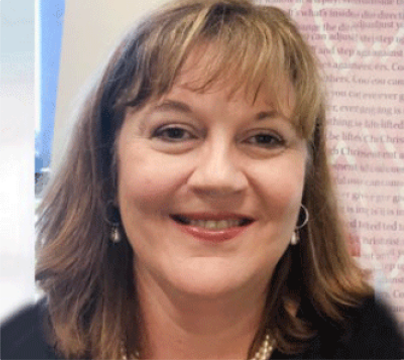
Melinda Laird, R.N.,
MSN
CEO and Chief
Nursing Officer
Cordell (Okla.)
Memorial Hospital

Jason Pilant, DHA,
MBA, FACHE
President and Chief
Administrative Officer
Covenant Health/
Roane Medical Center,
Harriman, Tenn.
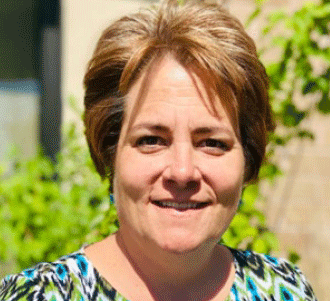
Jennifer Riley, MHA
CEO
Memorial Regional
Health,
Craig, Colo.
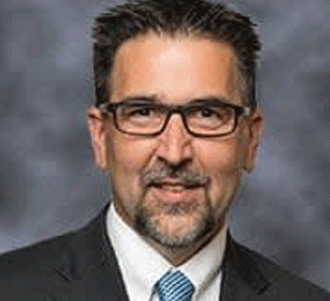
Erik Thorsen, MBA,
CPA, FACHE
CEO
Columbia Memorial
Hospital,
Astoria, Ore.
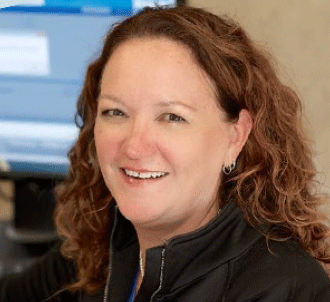
Lori Zindl
Vice President,
Business Development
Inovalon,
Pewaukee, Wis.
Greg Ruberg, MBA,
MA, PT, FACHE
President and CEO
Lake View Hospital,
Two Harbors, Minn.,
and Vice President,
St. Luke‘s Hospital
Duluth, Minn.
Kurt Forsyth, MHA,
FACHE
President
Intermountain
Delta and Filmore
Community Hospitals,
Delta, Utah
MODERATOR
Suzanna
Hoppszallern
Senior Editor,
Center for Health
Innovation
American Hospital
Association, Chicago
Participants
Brett Altman, DPT,
MBA, FACHE
CEO
Cass Health,
Atlantic, Iowa
Melanie Boyd, R.N.,
MHA, FACHE
Chief Operating
Officer
Clarke County
Hospital,
Osceola, Iowa
Ben Davis, MBA,
RHCEOC, FACHE
President and CEO
Glencoe (Minn.)
Regional Health
Brian Evans, MBA,
FACHE
CEO
Clarke County
Hospital,
Osceola, Iowa
Kurt Forsyth, MHA,
FACHE
President
Intermountain
Delta and Filmore
Community Hospitals,
Delta, Utah
Korrey Klein, M.D.
President and CEO
Family Health West,
Fruita, Colo.
Melinda Laird, R.N.,
MSN
CEO and Chief
Nursing Officer
Cordell (Okla.)
Memorial Hospital
Jason Pilant, DHA,
MBA, FACHE
President and Chief
Administrative Officer
Covenant Health/
Roane Medical Center,
Harriman, Tenn.
Jennifer Riley, MHA
CEO
Memorial Regional
Health,
Craig, Colo.
Greg Ruberg, MBA,
MA, PT, FACHE
President and CEO
Lake View Hospital,
Two Harbors, Minn.,
and Vice President,
St. Luke‘s Hospital
Duluth, Minn.
Erik Thorsen, MBA,
CPA, FACHE
CEO
Columbia Memorial
Hospital,
Astoria, Ore.
Lori Zindl
Vice President,
Business Development
Inovalon,
Pewaukee, Wis.
MODERATOR
Suzanna
Hoppszallern
Senior Editor,
Center for Health
Innovation
American Hospital
Association, Chicago
MODERATOR SUZANNA HOPPSZALLERN (American Hospital Association): Where are your revenue processes missing the mark today and what key performance indicators (KPIs) are top priorities?
KURT FORSYTH (Intermountain Delta and Fillmore Community Hospitals): As the hospital president, I look at the income statement and outliers at the end of the month. We use an outside service provider for registration, billing, and prior authorizations. We have contractual agreements in place for days outstanding. My two hospitals have improved significantly over the past couple of years.
BEN DAVIS (Glencoe Regional Health): As far as our billing practices, we do everything in house. One of our challenges is prior authorization. With patient access, it’s getting the insurance cards when insurance changes, when a patient is switching from Medicare to Medicare Advantage, and making sure we have prior authorizations.
We review accounts receivable (AR) days and we’ve seen them creep up. Our chief financial officer (CFO) flags all the prior authorizations that don’t get done.
Some operational processes may need to change to catch those things ahead of time. As an independent hospital, if coders go out on leave, that creates challenges. What do we do during the interim for the next three months? Once that person comes back, those days will drop.
BRETT ALTMAN (Cass Health): We’re also an independent critical access hospital, and we’ve had a lot of growth. As a CEO, I’m always thinking, ‘I wonder if we’re billing for that’ or ‘I wonder if anybody sent that invoice.’ We engaged an outside company to look into the efficiencies of our revenue processes and do a chargemaster review. They’ve already discovered anesthesia services that we haven’t been billing, or for which we haven’t been billing enough. We have a department of 12 support staff who handle patient financial services — four people work on prior authorizations.
ERIK THORSEN (Columbia Memorial Hospital): As former CFO, I appreciate that revenue cycle challenges are complex and spread across many departments. We’re struggling with charge capture issues in our departments. The prior authorizations are more challenging than ever. The peer-to-peer requirements to get authorization take more time and resources to obtain approvals that simply used to be approved right away.
Our revenue cycle runs efficiently. We track everything in Cerner. Our accounts receivable days (ARD) are good. We outsource coding. We look at discharged, not final billed (DNFB) every day, multiple times a day in multiple departments, ARDs, cash on hand, all those metrics. Our process works well, but we get hung up on denials just as everyone else does. The insurance companies underpay or don’t pay; we’re expending so many resources to get the reimbursement that we’re entitled to.
JENNIFER RILEY (Memorial Regional Health): Our revenue cycle has been in flux for a while. We’re trying to clean up our ARDs because they are very high. We brought in an outside company that does a net revenue evaluation. They identified a lot of opportunities for us, charges that we weren’t capturing, like supplies on the patient floor and in the emergency department (ED).
First, we are educating ourselves and having more hands-on oversight. We use an outsourced billing company, but holding their feet to the fire has been difficult. They are challenged with staffing issues, but we should never have an untimely filing. We’re working to get some different processes in place. I’m excited and intrigued about how AI and some other solutions might be able to help us.
”One of the KPIs that we track the most is first-pass yield — or clean claim rates or first-pass acceptance as the KPI clearinghouses refer to them. We monitor what percentage of claims are getting paid on submission, and we also monitor claims that are not billed and the length of time it takes to get the bill out the door.”
LORI ZINDLInovalon
LORI ZINDL (Inovalon): We work with critical access rural hospitals that completely outsource their billing operation or a certain payer. We sometimes do the interim coding when staff go on leave for three months. We built an intelligent tool that keeps track of claims and billing. With the staffing shortages, I am seeing that automation creates operational efficiencies to streamline burdensome administrative tasks and decrease errors.
One of the KPIs that we track the most is first-pass yield — or clean claim rates or first-pass acceptance as the KPI clearinghouses refer to them. We monitor what percentage of claims are getting paid on submission, and we also monitor claims that are not billed and the length of time it takes to get the bill out the door.
MELINDA LAIRD (Cordell Memorial Hospital): We’re one of six critical access hospitals that are fully managed and part of SSM Health in Oklahoma. I have a billing person that the other critical access hospitals will borrow. One of our challenges has been the volume increase in our outpatient services, which has put my team a little bit behind in coding and nurse documentation. We share coding with another one of our sister hospitals; they help us out and then we help them out with their billing. We all use Epic.
When a hospital closed fewer than 20 miles from us, we absorbed that ED volume and other services. Although they’ve reopened, we are still seeing an increase that puts us behind, too. Our CFO and a well-oiled team work together to make sure that we have good accounts receivable (AR).
GREG RUBERG (Lake View Hospital): In addition to being the CEO of Lake View Hospital and vice president of St. Luke’s, I’m the board chair of a nine-hospital collaborative called Wilderness Health. Our primary challenge is around the electronic health record (EHR). We’re all on different systems or different versions of the same system, and it’s a significant challenge. Our system is merging with another health system, so we’ll be going through another EHR transition in the future.
Some of our hospitals were high on days in AR, but we have been able to decrease and stabilize our system’s days in AR. Lake View’s CFO and director of finance oversee days in AR. Our CFO oversees the days in AR and our goal is 37 to 40 ARDs. We have a stable team on-site at Lake View and we track our days in AR weekly. Our current challenges are changes in insurance coverage for patients, registration staff updating demographic information, addresses and phone numbers, and managing insurance contracts. Coding takes place at the system level, and we have consolidated billing for inpatients and outpatients.
BRIAN EVANS (Clarke County Hospital): Looking at the big picture, the 20,000-foot view, from a key indicator standpoint, it’s about how we are doing compared to budget. What are our days in AR, cash on hand, days cash, all of those different indicators? If it matches budget, then things are going well. But every once in a while, you’re reminded that you don’t know what you don’t know.
When meeting with one of our coders last year, she started showing me claims that hadn’t been filed, which I didn’t know. By asking a lot of questions and finding the disconnect among our coders, the business office and a couple departments, I worked with our new revenue cycle director on how to fix that process so that everybody was working together.
”Denials have become really challenging. I have a lot of conversations with medical staff about what they’re charting. These days, it’s not what they say, it’s how they say it, and that is extremely frustrating.”
JASON PILANTCOVENANT HEALTH/ROANE MEDICAL CENTER
JASON PILANT (Roane Medical Center): Our 54-bed community hospital is part of Covenant Health. From a revenue cycle aspect, Covenant Health centralizes our business office, coding, scheduling, and a lot of authorization work. Information technology (IT) also is centralized through the health system.
As a former operations officer, I focus on that charge capture rate in the departments and length of stay. Our Medicare wage index is one of the lowest in the country. You have to look at everything at such a finite level.
Denials have become really challenging. I have a lot of conversations with medical staff about what they’re charting. These days, it’s not what they say, it’s how they say it, and that is extremely frustrating.
We watch our revenue cycle trends monthly. Having sister facilities throughout our health system, we are able to compare and contrast easily. If someone’s doing something well, if we’re not doing it as well, we can reach out and learn what they might be doing differently. It’s explaining the ‘why,’ especially to your providers and nursing staff, and how they play such key roles.
MODERATOR: How have you found success in utilizing data to be proactive, and where are you continuing to find your organization being reactive?
KORREY KLEIN (Family Health West): Data accuracy can be difficult with the revenue cycle. We’re in the midst of a five-year process improvement program to help and clean up some of the processes in our revenue cycle. A consulting company analyzed our revenue cycle. A different consulting company attempted to fix the EHR, and now we’re in the process of switching our EHR to a different one. The revenue cycle is complex, and I’ve been shocked at how often the EHR stands in the way without a good solution, or that the data produced are not accurate.
We’re doing a lot of data validation and making sure to use recommended workflows with our EHR. I’m also a family doctor, so I’m saying, ‘This is how we do it here. Can you build it like that?’ We’re looking at: What do we want at the end? What kind of data? What KPIs do we need? How do we get this claim paid? We’ve been working backward from there.
THORSEN: We built a decision support team when we converted to Cerner in 2014 and stipulated that the company give us all the elements out of Cerner in a big data warehouse. Then our team can utilize the data for our needs. The team includes accounting, finance and IT staff, and through the years they’ve created dashboards and reports. They created a tool for the revenue cycle department to use and the director can uncover inefficient processes.
Building the decision support team has been one of the best decisions I’ve ever made in the organization. Now, it’s a six-member team that’s more specialized with a 340B analyst and contract underpayment analyst. Soon, we’re going to add another analyst to focus on population health data. We’ll be collecting clinical data from other organizations in our community and using it to create registries and manage different cohorts of patients.
Clean data is everything. It feeds into better decisionmaking and it’s much more efficient for our departments to look at a dashboard than figuring out how to run or write a report.
”Building the decision support team has been one of the best decisions I’ve ever made in the organization. Now, it’s a six-member team that’s more specialized with a 340B analyst and contract underpayment analyst. Soon, we’re going to add another analyst to focus on population health data.”
ERIC THORSENCOLUMBIA MEMORIAL HOSPITAL
PILANT: Decision support is one of our most utilized teams and services to identify and resolve problems quickly. When looking at service lines, a particular surgery type or outpatient service, we can readily see the financial feasibility. Five years ago, a service may have been financially viable but today, it’s having a negative impact on our financial resources. Why is that? Is it the cost of supplies, or is it something else? No matter who’s seeing the data, whether it’s the board or medical staff, make sure you have clean, credible data, because that’s the first thing that will be questioned.
THORSEN: Having a decision support team that can validate and ensure accurate data is valuable across the organization. It becomes your single point of truth.
MODERATOR: Many departments have an impact on denial rates. What strategies and steps are you using to foster collaboration across teams to help improve cash flow and strengthen your financial performance?
RUBERG: In the past, the focus was on individual staff and departmental performance. Now, we focus more on the organizational big picture and transparency. We share financials, statistics, and dashboards with our employees, providers, the board, and the patient and family advisory committee.
The conversation centers around the fact that we’re all one team. We all have a unique and individual role that matters to every other unique and individual role. It took time to build that kind of psychological safety and trust, but we’re at the point now in employee forums where an employee will raise a hand and say, ‘I noticed this issue in my department. What do you think?’ We have a discussion immediately. It’s been a lot of fun. We’re going to succeed as one team or struggle as one team. It’s not department vs. department.
THORSEN: We have a revenue integrity committee. The CFO leads a monthly forum with the department directors, the revenue cycle director and compliance officer to educate clinicians on the financial side, the chargemaster, what they’re billing for their services, their denials, and underpayments and KPIs.
LAIRD: My leadership committee struggles with how we get staff to understand the data. Staff want to take care of patients, but now they need to understand the ‘why’ behind the data. Why can’t we get the claim out? Why isn’t the claim approved or paid? They don’t want to look at the data unless they can understand what they can do to impact it.
PILANT: By dumping a flat file from the EHR into our financial software, we’ve been able to create real-time financial reporting for every department manager based on their budgets and actual financial performance.
We’re trying to anticipate difficult discharges and claims that need to be addressed more thoroughly. For example, if we’re going to need extra days for therapy, we’re starting to prompt the therapist to document the need so that when the prior authorization is due to be renewed, we already have the data.
MODERATOR: In the face of ongoing workforce challenges, what are some of the processes you’re implementing to help prevent burnout, alleviate shortages and ultimately drive both staff and patient satisfaction?
”In the past, the focus was on individual staff and departmental performance. Now, we focus more on the organizational big picture and transparency. We share financials, statistics, and dashboards with our employees, providers, the board, and the patient and family advisory committee.”
GREG RUBERGLAKE VIEW HOSPITAL
MELANIE BOYD (Clarke County Hospital): As chief operating officer, I oversee utilization review. Some of our successes include putting our prior authorizations for outpatient and ambulatory inpatient groups together. However, there are lot of challenges with prior authorizations on the inpatient side, especially with the Medicare Advantage plan. It’s been challenging to make progress in process improvements with turnover in leadership and team members in medical records, hospitalists, utilization review, and the medsurg manager.
KLEIN: We’ve had some success in consolidating all our prior authorization staff into one department to develop expertise. Then, the person authorizing the magnetic resonance image (MRI) is sitting next to the person authorizing the surgery that came from the MRI, who is also authorizing the medicine to treat the disease state that caused the problem. That has really helped. It’s too complicated to rely on the payer to authorize the way we used to.
We’re experimenting on the front edge of AI to level the playing field with the insurance companies. My goal for AI is to know the insurance manuals better than insurance companies do, and for AI to know our insurance contracts better than we do to give advice to our prior authorization person so that if they are ever on the phone with a payer, they remain on the line until they have an authorization.
”We’re experimenting on the front edge of AI to level the playing field with the insurance companies. My goal for AI is to know the insurance manuals better than insurance companies do, and for AI to know our insurance contracts better than we do to give advice to our prior authorization person so that if they are ever on the phone with a payer, they remain on the line until they have an authorization.”
KORREY KLEINFAMILY HEALTH WEST
RUBERG: The difficulties post-COVID are workforce limitations and burnout, where people are just trying to get through their day. We don’t always have enough staff answering phones and registering patients. The additional demands can become too much for an already strained workforce: ‘Can you please verify all this? Can you check their insurance for prior authorization? Can you collect a co-pay?’ We recently hired a prior authorization employee that’s going to cover every service that we deliver at Lake View with additional staff support. Our goal is to support the revenue cycle teams and others with best practices.
RILEY: We’re doing as much as we can before the patient even comes to the clinic, and that’s putting some of the responsibility onto the patient in our patient portal. Currently, when someone comes into the clinic, they can’t see what the registrar is looking at. We’re looking at implementing a dual screen that pulls up patient information so that the patient sees the demographic information and what they’re signing. These quick verifications relieve some of that work from the registrar at the front end.


